Blog

The absolutely true story of the ‘ghost’ that rolled my toy across the room

Let me start by saying that I don’t believe in ghosts or the supernatural, but when I was 4 or 5, my mother and I saw part of a toy rocket flip onto its side and roll across the living room floor by itself.

It was an Apollo Moon Rocket. It was probably 12 inches tall and maybe 2 inches across. It had 5 stages: the capsule, the thing the capsule sat on, 2 tubes that formed the body and a round base with 5 nozzles on the bottom but no moving parts, no springs or anything that would make it move by itself.

One afternoon, the parts of the rocket were scattered across the floor, and the base was lying flat, nozzles down. I was sitting on Mom’s lap on the couch watching TV when the base stood on edge, rolled 4 or 5 feet across the floor and fell over onto the nozzles.

It scared the crap out of me.

Mom tried to calm me down. I remember her telling me that it wasn’t a ghost, although she couldn’t explain why it stood on its side and rolled across the room.

When Dad came home from work, I remember running over to tell him what happened, and even though I had a witness, I don’t think he entirely believed me, and, frankly, I don’t blame him.

I doubted the story myself until I asked Mom about it a few years ago. She said it happened, that it wasn’t a trick, that no one touched it, no one was near it, that nothing else in the house moved, just the rocket part.

Like I said, I don’t believe in the paranormal. I’m sure there’s some logical explanation, but damned if I can think of one.
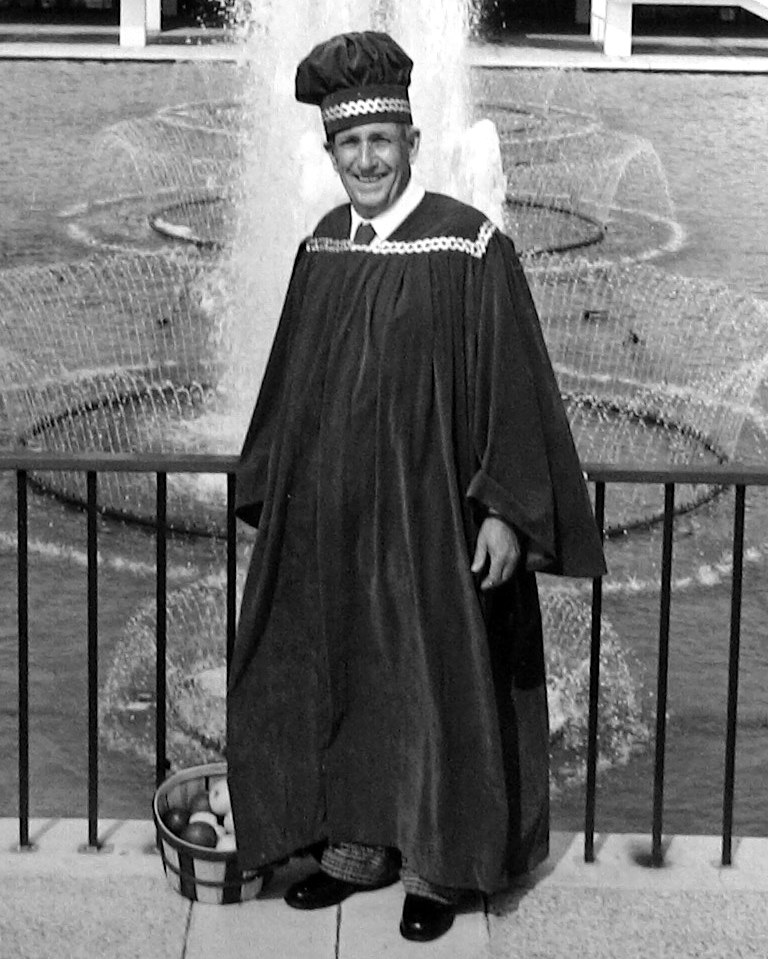
Uncle Cecil, the Apple King

This weekend is Apple Day in Paintsville, Kentucky. Officially, it’s the Kentucky Apple Festival, but everyone calls it Apple Day.
 
It’s basically a county fair. There’s a carnival and a parade and a lot of food, like apple pie, caramel apples and apple butter. There aren’t really a lot of orchards in Johnson County, but there are a few, and every year, the farmer with the best apples is proclaimed the Apple King.
 
When I was 8 years old, my Great Uncle Cecil was Apple King because of his Minerva apples.
 
Cecil was Granny’s brother. He and Aunt Minerva never had kids, but people adopted them as surrogate grandparents. They lived in a log house they built themselves on a small farm up a hollow near a place called Meally.
 
They bickered a lot. Minerva was a little hard of hearing, and Cecil sort of mumbled. He’d say something, she wouldn’t understand him, so he’d say it louder and louder until she understood or accused him of yelling at her, but they loved each other deeply.
 
Cecil was kind of a hacker in the DIY-sense of the word. He loved taking things apart and seeing how they worked and trying to make them do things they weren’t meant to do. He tinkered with old radios and model trains, and he tinkered with his apple trees.
 
I don’t know a lot about horticulture, but he would take stems from one kind of apple tree and graft them onto another one, and after many years, he came up with a hybrid he called the Minerva apple.

Minerva apples were yellow and big and perfect — crisp, not mushy, and a little more sweet than tart. When he finally entered the Minerva apple in the Apple Day contest, the other farmers didn’t have a chance.

I don’t remember the last time I had a Minerva apple. As he and Minerva got older, Cecil let his orchard go, and, one year, there simply weren’t any more.
 
Minerva passed away in 1995, and Cecil died in 1999. I went to see him a few months before he died. He was sitting at the kitchen table, drinking coffee and watching CNN on the little TV in the corner. We were making small talk, and I asked how he came up with the Minerva apple. 

He grinned but wouldn’t tell me, because, really, those apples were always just Minerva’s apples.

Saying no, the right way

Walt Disney, C.V. Wood, who helped develop Disneyland, and Harrison "Buzz" Price

I learned the other day that Harrison “Buzz” Price passed away about a year ago. He was 89.

You probably don’t know the name, but Walt Disney did.

Disney dreamed up the modern theme park, but Harrison Price was a numbers man. He studied the data and told Disney where he should build it.

That’s how I met Harrison Price. I used to work in newspapers, and when I worked at the paper in Orlando, he was always gracious and patient when I called him with questions about amusement parks in general or Disney in particular.

When he was in his early 80s (and only semi-retired), he wrote a book called Walt’s Revolution: By the Numbers, about his career and what he called “rollercoaster math,” the math of the attractions business. We finally met when he came to town to promote the book, and he was even nicer in person than he had been on the phone.

Walt’s Revolution is a fascinating book, both as history and as a look at how that business operates. Of course, I’ll never try to build a theme park, but there’s one lesson in the book I’ll always remember:

Don’t say no.

Instead, say, “Yes, if….”

“Walt liked this language,” Price said in the book.

“No, because…” is the language of a deal killer. “Yes, if…” may mean the same thing, but Harrison Price called it “the approach of the deal maker.”

“Creative people thrive on ‘Yes, if,'” he said.

This is a great lesson, and it’s been a tough one to learn.

It’s usually easier to say no, but things usually turn out better when you turn it around and think it through and answer, “Yes, if….”